Add Row
Add Element
cropper
update
Green Energy Channel
update
Add Element
  • Home
  • Categories
    • Solar Power
    • Wind & Wave Power
    • Battery Storage
    • EV's
    • Eco Living
    • Innovator Spotlight
    • How-to Guides
    • Market Trends
    • Policy Impact
    • Extra News
September 12.2025
3 Minutes Read

Unlocking 35 GW of Pumped Hydro Storage: Why It Matters for Green Energy

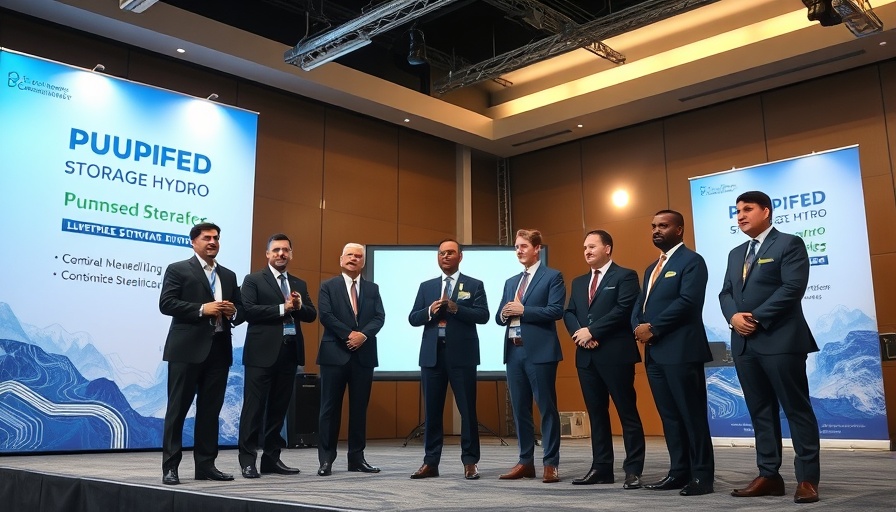
Pumped Hydro Storage in Europe: Professionals at a conference.

An Alliance for a Greener Future: The Paris Pledge

In a significant stride towards sustainable energy, the International Hydropower Association (IHA) in collaboration with Eurelectric has launched the Paris Pledge, rallying over 50 utilities, hydropower suppliers, and energy-focused associations to unlock approximately 35 GW of pumped hydro storage across Europe. This initiative not only represents a call to action for EU policymakers but also underscores the critical role that long-duration energy storage systems are expected to play in ensuring grid stability and enhancing energy security throughout the continent.

Understanding Pumped Hydro Storage and Its Importance

Pumped hydro storage is lauded for its efficiency and ability to provide a reliable energy supply by storing excess energy during low-demand periods and releasing it during peak demand. With the ongoing rise of renewable energy sources, such as solar and wind, which are often intermittent, pumped hydro presents a viable solution to balance the energy grid. The Paris Pledge highlights the urgency to advocate for favorable regulatory conditions that will facilitate the swift deployment and scaling of this technology across member states.

Urgent Need for Regulatory Support

The initiative calls for immediate attention from both EU and national regulators to create an environment conducive to investment in pumped hydro projects. As energy demands rise and the importance of renewable energy becomes more pronounced, the stability offered by long-duration storage solutions remains vital. Stakeholders acknowledge that without conducive policies, many proposed projects may stall, initiating a potential energy crisis in the face of increasing reliance on variable renewable sources.

The Broader Context: A Shift Towards Green Energy

As Europe pivots toward achieving climate neutrality, the integration of systems like pumped hydro storage becomes an essential piece in the sustainability puzzle. Countries across the continent are enhancing their focus on green energy initiatives, seeking innovative approaches to meet ambitious climate targets. For instance, recent studies indicate that several nations have witnessed remarkable growth in solar energy capacity, with solar output doubling in Czechia, Hungary, Poland, and Slovakia between 2019 and 2024. The energy landscape is evolving swiftly, yet challenges remain in integrating these new sources into the existing grid smoothly.

Future Trends: What Lies Ahead for Renewable Energy?

The industry's leaders suggest that the successful implementation of the Paris Pledge could catalyze a wave of investment and innovation in the renewable sector, making Europe a global leader in sustainable energy solutions. With advances in technology and a collective commitment to clean energy goals, pumped hydro storage could emerge as a cornerstone of the region's energy infrastructure while addressing the dual challenges of reliability and sustainability.

Conclusion: A Call to Action for Policymakers and Stakeholders

The Paris Pledge serves as a pivotal moment for Europe's energy future, emphasizing the need for decisive action and collaboration among various stakeholders. As regulatory frameworks are shaped, the commitment to enhancing pumped hydro storage capacity will play a critical role in mitigating climate change and transitioning toward eco-friendly power solutions. Engaging with this trend can drive meaningful contributions toward an energized, sustainable future, encouraging both public support and industry participation in the clean energy revolution.

Extra News

2 Views

0 Comments

Write A Comment

*
*
Please complete the captcha to submit your comment.
Related Posts All Posts
04.10.2026

Brazil Adds 2.3 GW of Solar: What It Means for Renewable Energy Future

Update Brazil's Solar Surge: Unpacking Recent Growth in Clean Energy In an impressive display of commitment to renewable energy, Brazil has installed a staggering 2.3 gigawatts (GW) of solar power capacity in just the first two months of 2026. According to the National Electric Energy Agency (Aneel), this growth has been driven predominantly by centralized generation, which has more than doubled compared to the previous year. Understanding the Shift: Centralized vs. Distributed Generation Brazil’s solar revolution is marked by a striking contrast between centralized and distributed solar installations. While centralized generation contributed 1,186 MW, distributed generation saw a significant decline, adding only 1,145 MW—representing a 37% drop from the previous year. This shift highlights the country’s increasing focus on utility-scale solar projects. How does this impact Brazil's energy landscape? The Role of Distributed Generation in Solar Growth Within the realm of distributed generation, residential solar installations have emerged as leaders, contributing 739 MW in early 2026. The commercial sector followed with 220 MW, and rural projects added 93 MW. In comparison, early 2025 saw residential solar installations peak at over 1 GW, showcasing a reduction in momentum across all segments since then. What factors are causing this dip in distributed solar development? Future Projections: A Shifting Landscape Ahead The Brazilian Photovoltaic Solar Energy Association (Absolar) has projected a decrease in solar additions for 2026, estimating a total of 10.6 GW aimed for new installations—down from 11.4 GW in 2025. Despite this expected slowdown, centralized solar generation is anticipated to leap forward with forecasts of nearly 4,954 MW to be added this year alone. This could be a pivotal year for Brazil’s energy goals, particularly as the country aims for a cumulative solar capacity of 107 GW by 2035. Investing in the Future: Policy Implications and Green Energy Brazil's energy strategy includes a significant emphasis on storage solutions, aiming for 7 GW by 2035. Such policies could enhance the resilience and efficiency of solar generation, addressing concerns about curtailed output during periods of peak demand. As policymakers shape these strategies, how will they address the challenges posed by variable energy sources, ensuring a reliable power supply? Conclusion: Building a Sustainable Future The landscape of solar energy in Brazil presents both opportunities and challenges. With the government setting forth bold targets and the industry adapting to meet them, the coming years will be critical in determining how effectively Brazil can transition to a sustainable energy future. Engaging with this evolving conversation about solar energy and its implications don’t just hold significance for Brazil, but for global energy trends as well.

09.02.2025

Revolutionizing Solar Energy: Using Drones and Satellites to Map Vegetation in PV Plants

Update Mapping Vegetation in PV Plants: A New Era of PrecisionIn recent years, as solar power becomes an increasingly vital source of renewable energy, the need for precise environmental assessments around photovoltaic (PV) plants has never been more pressing. Scientists from Zhejiang University in China have made significant strides in this area, developing a multi-scale method that uses a combination of ground data, unmanned aerial vehicles (UAVs), and satellite imagery. This innovative approach not only enhances the accuracy of vegetation condition assessments within PV plants but also aims to correct the inherent biases present in traditional satellite data.Harnessing Advanced Technologies for Better AccuracyThe researchers focused on nine PV facilities across varying climate zones in mainland China. Utilizing high-resolution aerial imagery from DJI Phantom 4 and DJI Mavic 3 multispectral drones, alongside Level-2 Sentinel-2 satellite data, the team sought to bridge the gap between on-the-ground truth and airborne imagery. This unique methodology yielded impressive results, demonstrating a 16.98% reduction in bias when compared to using satellite estimates alone.The Importance of Accurate Vegetation AnalysisUnderstanding the relationship between vegetation and solar panels is crucial for sustainable energy development. The research found a strong correlation between vegetation growth beneath and between the panels. In fact, measurements indicated that vegetation presence can significantly impact the normalized difference vegetation index (NDVI), with values rising from 0.248 to 0.298 following the incorporation of under-panel vegetation data. This deeper insight into existing greenery allows for better-informed planning and decision-making processes concerning PV plant installations, ensuring minimal ecological disruption.Future Predictions: Enhancements in Environmental ManagementAs the world shifts towards greener energy sources, integrating advanced technologies like UAVs and satellite monitoring into the environmental assessment of solar plants will likely become the norm. This research not only contributes to the current understanding of vegetation dynamics within PV arrays but also sets a precedent for future studies. Such methodologies promise to play a pivotal role in effectively managing plant growth, thereby promoting eco-friendly and sustainable solar energy practices.Conclusion: Call for Adoption of Innovative PracticesAs we venture into an era that emphasizes sustainability and environmental responsibility, adopting innovative practices such as those explored by Zhejiang University's scientists is imperative. Embracing these advanced mapping techniques not only facilitates more accurate assessments for PV plants but also supports an overarching goal of mitigating the ecological impacts of renewable energy installations. The advancements in technology and their applications in fields like solar energy stand to profoundly change the landscape of energy production and environmental harmony.

Terms of Service

Privacy Policy

Core Modal Title

Sorry, no results found

You Might Find These Articles Interesting

T
Please Check Your Email
We Will Be Following Up Shortly
*
*
*