 Add Row
  Add
Add 


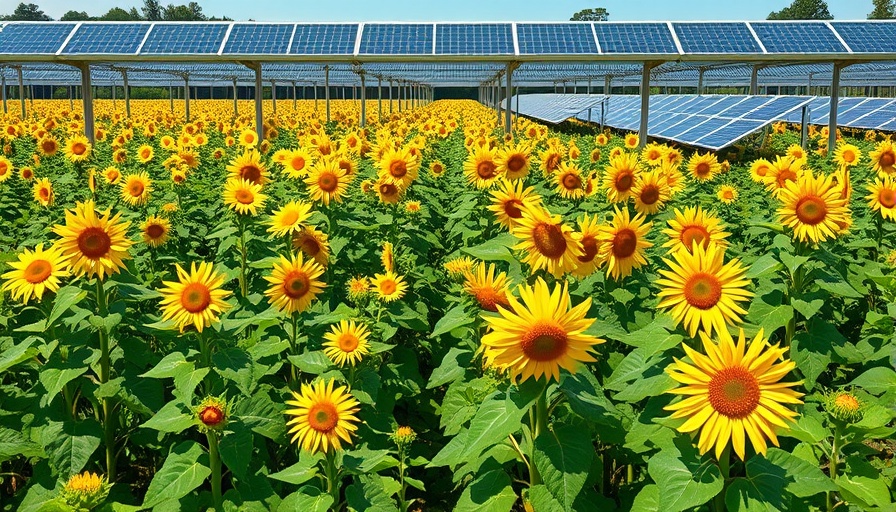
Mapping Vegetation in PV Plants: A New Era of Precision
In recent years, as solar power becomes an increasingly vital source of renewable energy, the need for precise environmental assessments around photovoltaic (PV) plants has never been more pressing. Scientists from Zhejiang University in China have made significant strides in this area, developing a multi-scale method that uses a combination of ground data, unmanned aerial vehicles (UAVs), and satellite imagery. This innovative approach not only enhances the accuracy of vegetation condition assessments within PV plants but also aims to correct the inherent biases present in traditional satellite data.
Harnessing Advanced Technologies for Better Accuracy
The researchers focused on nine PV facilities across varying climate zones in mainland China. Utilizing high-resolution aerial imagery from DJI Phantom 4 and DJI Mavic 3 multispectral drones, alongside Level-2 Sentinel-2 satellite data, the team sought to bridge the gap between on-the-ground truth and airborne imagery. This unique methodology yielded impressive results, demonstrating a 16.98% reduction in bias when compared to using satellite estimates alone.
The Importance of Accurate Vegetation Analysis
Understanding the relationship between vegetation and solar panels is crucial for sustainable energy development. The research found a strong correlation between vegetation growth beneath and between the panels. In fact, measurements indicated that vegetation presence can significantly impact the normalized difference vegetation index (NDVI), with values rising from 0.248 to 0.298 following the incorporation of under-panel vegetation data. This deeper insight into existing greenery allows for better-informed planning and decision-making processes concerning PV plant installations, ensuring minimal ecological disruption.
Future Predictions: Enhancements in Environmental Management
As the world shifts towards greener energy sources, integrating advanced technologies like UAVs and satellite monitoring into the environmental assessment of solar plants will likely become the norm. This research not only contributes to the current understanding of vegetation dynamics within PV arrays but also sets a precedent for future studies. Such methodologies promise to play a pivotal role in effectively managing plant growth, thereby promoting eco-friendly and sustainable solar energy practices.
Conclusion: Call for Adoption of Innovative Practices
As we venture into an era that emphasizes sustainability and environmental responsibility, adopting innovative practices such as those explored by Zhejiang University's scientists is imperative. Embracing these advanced mapping techniques not only facilitates more accurate assessments for PV plants but also supports an overarching goal of mitigating the ecological impacts of renewable energy installations. The advancements in technology and their applications in fields like solar energy stand to profoundly change the landscape of energy production and environmental harmony.



Write A Comment